


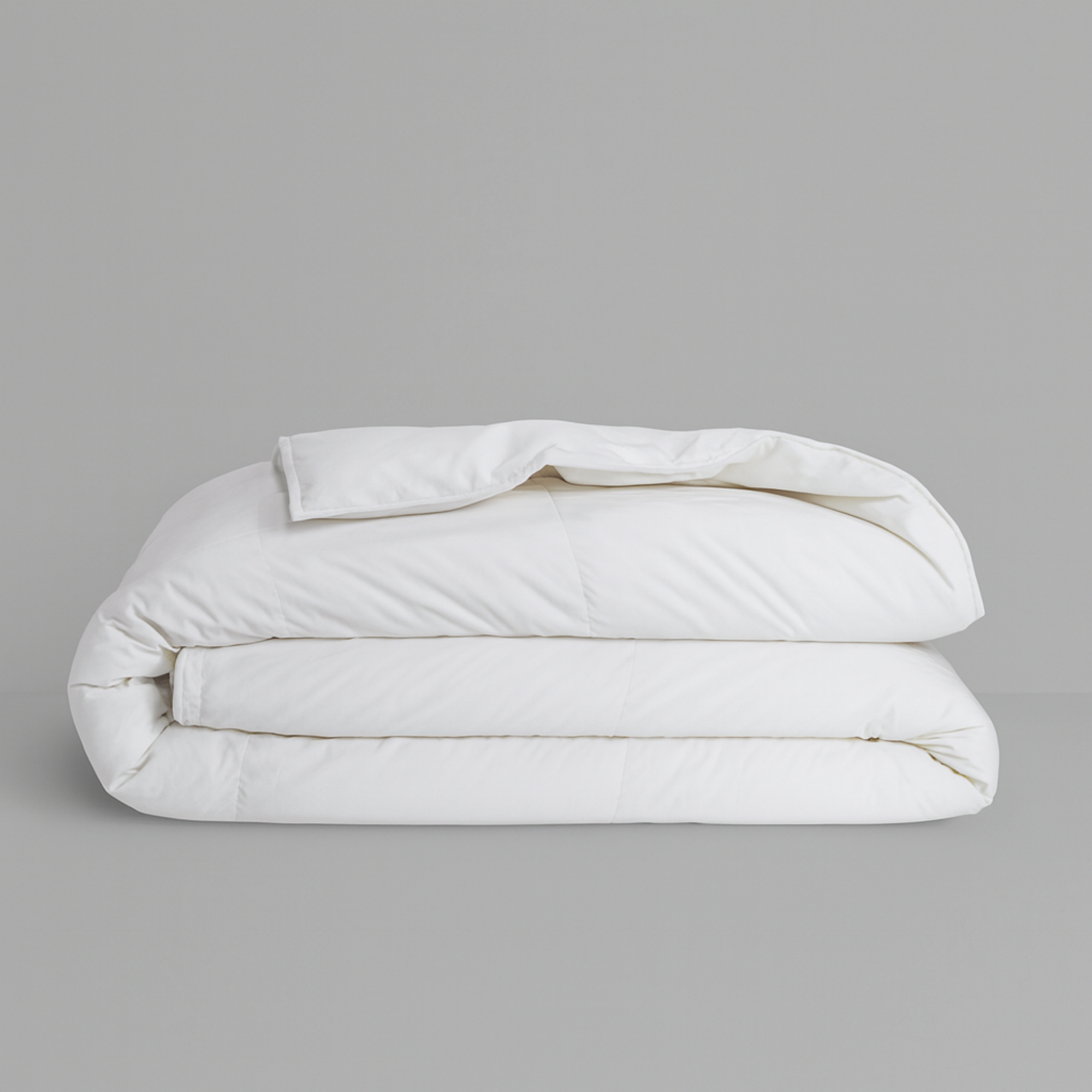

Premium White Goose Feather & Down Duvet
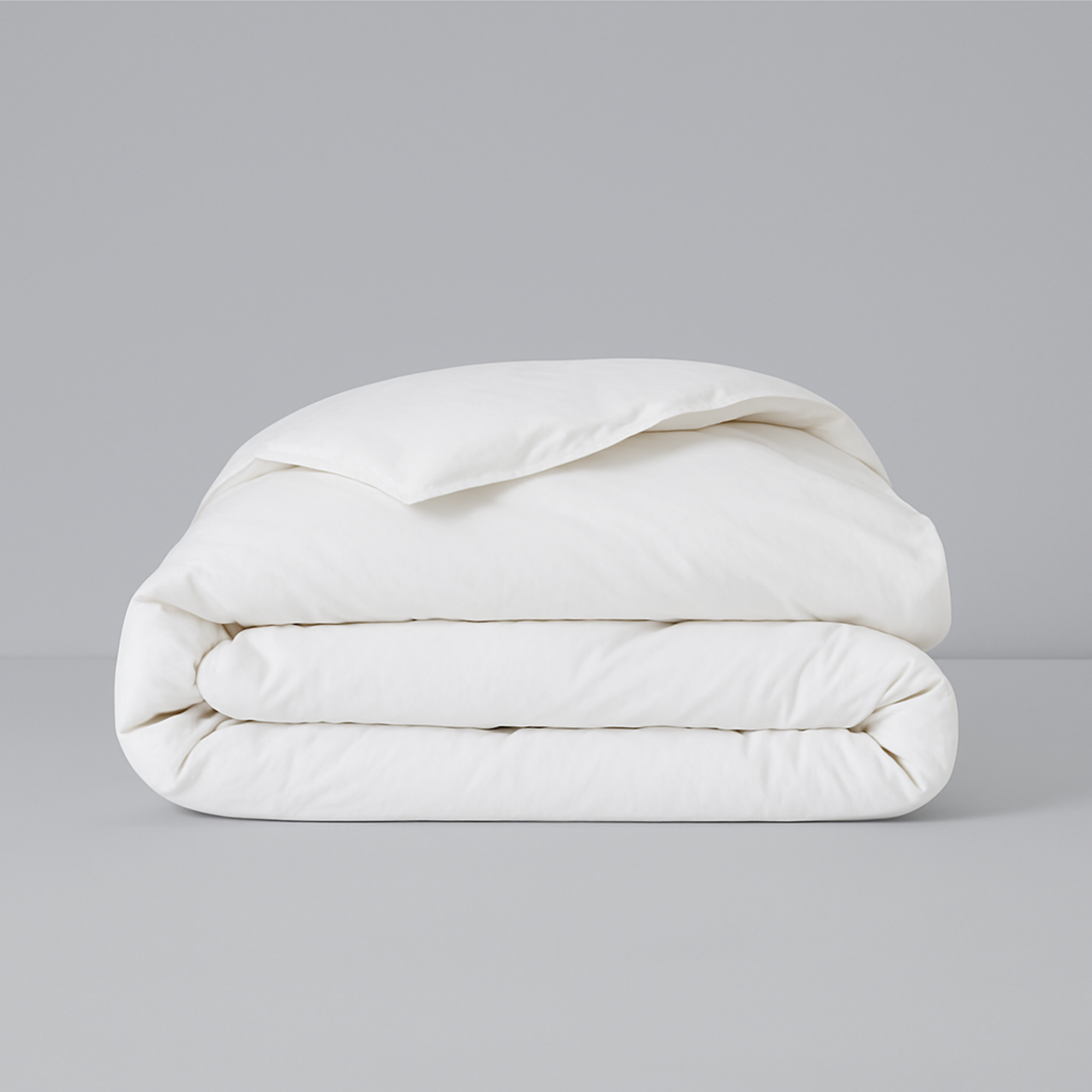


Natural Comfort, Certified
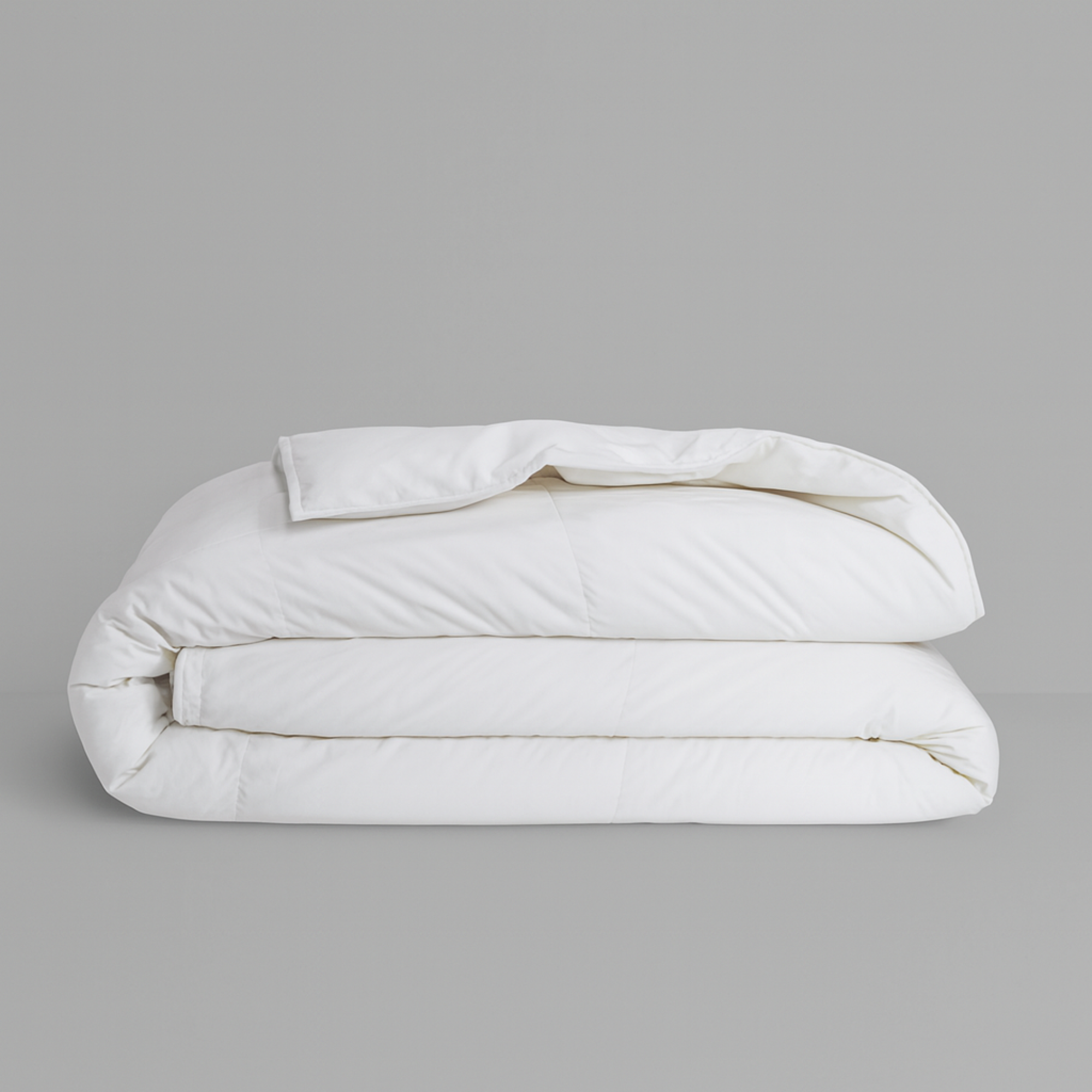

Compare Our Feather & Down Duvets
Every duvet here: baffle-box construction, down-proof cotton percale shell, RDS certified (IDFL TE-99972106), DOWNMARK® certified, OEKO-TEX® STANDARD 100, filled and finished in Canada.
| Duvet | Fill | Species | Construction | Feel | Best For |
|---|---|---|---|---|---|
| Feather Duvet | 100% small white feather | Goose | Baffle box, double-stitched piped edges, four corner loops | Firm, substantial, structured | Sleepers who want weight on the bed, and the best value in natural fill |
| White Feather & Down Duvet | 80% small white feather / 20% white down | Duck | Baffle box | Softer and loftier, still supportive | The middle ground — more loft without losing feather structure |
| Premium White Goose Feather & Down Duvet | 80% white feather / 20% white down | Goose | Hand-sewn baffle box | Loftiest and softest here | The most refined feather duvet we make |
Feather, Feather & Down, or Pure Down?
Down and feathers come from the same birds but do completely different jobs. Down grows in three-dimensional clusters with no quill, and it insulates — it traps air, which is what makes a down duvet feel warm and weightless at once. Feathers have a central quill and flat vanes. They don’t trap air nearly as efficiently, but they compress, spring back, and hold structure in a way down doesn’t.
That difference is usually framed as feathers being the lesser material. It’s more accurate to say they do a different thing. A Feather Duvet drapes with weight and holds its shape; a Down Duvet floats. Which one you want is a preference, not a quality tier.
What a blend does is combine both. In an Feather & Down Duvet, the feathers form the supporting matrix and the down fills the gaps between them — you get loft and softness without losing the structure and the drape.
| Fill Type | Composition | Feel & Weight | Warmth | Best For | Where To Find It |
|---|---|---|---|---|---|
| 100% Feather | All feather, no down | Heaviest and firmest; drapes with weight | Moderate | Sleepers who want a substantial duvet, and the lowest entry price | Feather Duvet |
| Feather & Down (80/20) | Feather-dominant, down fills the air spaces | Lofty and soft, with feather structure underneath | Moderate to warm | Most people — the best balance of loft, support and price | This collection |
| Down & Feather (down-dominant) | Down-dominant, fine feathers added for weight | Light with a little more body than pure down | Warm | Down warmth with a slightly weightier hand | Premium Goose Down & Feather Duvet |
| 100% Goose Down | Pure down clusters, no feather | Lightest and loftiest; almost weightless | Warmest per ounce | Cold sleepers, cold bedrooms, and anyone who wants maximum warmth at minimum weight | Goose Down Duvets |
Why 240 Thread Count Is a Deliberate Choice
Thread count on a duvet shell has a different job than thread count on a sheet. A duvet shell has to be down-proof: woven tightly enough that quills and down clusters cannot work their way through the fabric, over years of compression.
Down-proofing is achieved through weave density and yarn quality, not by raising the thread count. A 233 thread count percale woven properly is fully down-proof, more durable than a higher-count shell, and more breathable — which matters more on a feather duvet, because feathers hold moisture more readily than down does.
The trade-off is hand-feel and sound. A tighter, lower-count weave has a crisp, papery character. Our 240 thread count Premium shell is a little softer and quieter; our 233 thread count shells are a little crisper and more durable. Both are down-proof. Neither is better — and since your duvet lives inside a duvet cover, the cover is what you actually feel.
Sized Wider for a Proper Drape
Every duvet in this collection is cut two inches wider than the Canadian standard.
Duvet sizing in Canada is not regulated. Brands vary by two to four inches on the same size label, which is why a duvet from one manufacturer can sit oddly inside a cover from another.
Royal Elite duvets are cut to a deliberate specification: 88 inches in length across every size, with the extra fabric put into width. That is a considered decision rather than a rounding difference. Width is the dimension that produces drape — it is what hangs over each side of the bed. Extra length mostly gathers at the foot, where nobody sees it and it does no work.
The result is an extra inch of drop on each side, in every size. On a Queen, that is a 15-inch drop per side rather than the 14 inches most Canadian duvets give you. It is the difference between a duvet that stops at the edge of the mattress and one that falls the way a properly made hotel bed does — no exposed mattress edge, no midnight tug-of-war, and no draught coming in at the sides.
| Size | Duvet Dimensions | Dimensions (cm) | Fits Mattress | Drop Per Side |
|---|---|---|---|---|
| Twin | 66" x 88" | 168 x 224 cm | 39" x 75" | 13.5" |
| Double | 80" x 88" | 203 x 224 cm | 54" x 75" | 13" |
| Queen | 90" x 88" | 229 x 224 cm | 60" x 80" | 15" |
| King | 104" x 88" | 264 x 224 cm | 76" x 80" | 14" |
How Much Fill Is in Each Duvet
Fill weight is the clearest way to see the difference between the three. Feathers weigh more than down, so the 100% feather duvet carries the most fill by weight while feeling firmer rather than warmer.
| Duvet | Twin | Double | Queen | King |
|---|---|---|---|---|
| Feather Duvet | 47 oz | 58 oz | 68 oz | 77 oz |
| White Feather & Down Duvet | 32 oz | 38 oz | 45 oz | 51 oz |
| Premium White Goose Feather & Down Duvet | 32 oz | 38 oz | 45 oz | 51 oz |
Certifications and Canadian Manufacturing
What each certification on this page actually verifies.
Maholi has manufactured bedding in Toronto since 1994 and has served on the board of the Down Association of Canada since 1995. Every duvet in this collection is filled and finished at our own East York facility — not imported and relabelled.
| Certification | What It Verifies | Applies To |
|---|---|---|
| Responsible Down Standard (RDS) | Tracks feather and down from source to finished product; prohibits live-plucking and force-feeding. Certified by IDFL, certificate TE-99972106. | All three duvets |
| DOWNMARK® | Verifies the authenticity and quality of the feather and down filling, and that the product was finished in Canada. | All three duvets |
| OEKO-TEX® STANDARD 100 | Every component of the finished textile — fabric, thread, dye and fill — independently tested against a list of substances harmful to human health. | All three duvets |
| Made in Canada | Filled and finished at our own East York facility in Toronto, not imported and relabelled. | All three duvets |
Feather Duvet Questions, Answered
What is the difference between a feather duvet and a down duvet?
Feathers are the bird’s outer plumage — flat, with a central quill. Down is the fine, quill-free cluster layer underneath. Down insulates far better per ounce, so a down duvet is lighter and warmer. Feathers compress and spring back, so a feather duvet is heavier, firmer and more supportive. A feather and down duvet blends the two: the feathers give structure, the down adds loft and softness.
What does 80/20 feather and down mean?
80% of the fill by weight is feather, 20% is down. It is the standard blend for a feather-dominant duvet, and it is where most of the loft benefit arrives — the down fills the air spaces between the feathers without changing the duvet’s structure or weight noticeably.
Why does a feather duvet rustle when I move?
Down-proof fabric is woven very tightly so quills cannot migrate through it, and a tight weave at a lower thread count has a crisp, papery hand. That sound is the shell doing its job, not a defect. It settles noticeably over the first few weeks and once the duvet is inside a cover. Every shell in this collection is the same 240 thread count percale, so all three behave alike. If you would rather not hear it at all, a pure goose down duvet is quieter, because down clusters have no quills to move against the fabric.
Will feathers poke through the duvet?
Our shells are down-proof cotton percale, and we use small white feathers specifically because large quills are what cause poke-through. Over years, a single quill can occasionally work through a seam. If it does, pull it out in the direction it’s already pointing rather than sideways — pulling sideways enlarges the hole.
What size is a Royal Elite feather duvet?
Twin is 66" x 88", Double is 80" x 88", Queen is 90" x 88" and King is 104" x 88". Every size is 88 inches long, with the extra fabric put into width — two inches wider than the Canadian standard in each size, which gives roughly an extra inch of drape on each side of the bed.
Is your feather duvet goose or duck?
Both, depending on the model. The Feather Duvet is filled with 100% small white goose feather. The Premium White Goose Feather & Down Duvet is 80% white goose feather to 20% white goose down. The White Feather & Down Duvet is 80% small white duck feather to 20% white duck down.
Is goose feather better than duck feather?
Goose plumage is larger and more resilient, so a goose-filled duvet generally holds its loft longer and feels a little airier at the same fill weight. Duck is a more cost-effective way to get the same natural performance. In practice, how much down is in the blend affects how the duvet feels more than which bird it came from — which is why our 100% goose feather duvet is the firmest of the three despite being goose.
What size duvet cover do I need for a Royal Elite feather duvet?
Match the cover to the duvet’s labelled size, not to your mattress. A Queen duvet needs a Queen cover. Because duvet sizing is not standardised in Canada, check the printed dimensions on any cover from another brand against the measurements above before buying.
Are feather duvets warm enough for a Canadian winter?
For a bedroom held around 18–20°C (65–69°F), yes — these are designed as all-season duvets and most Canadian homes sit in that range. If your bedroom runs colder than 18°C, or you sleep cold, a goose down duvet in a Winter weight is the better choice.
Can I machine wash a feather duvet?
No. Agitation breaks down the fill and most domestic dryers can’t fully dry a Queen or King duvet — trapped moisture causes clumping and odour. Use a dry cleaner who specialises in down and feather bedding, spot clean with Zero® or Woolite® in between, and air the duvet outdoors away from direct sun. A duvet cover dramatically extends the time between cleanings.
Do feather duvets smell?
Not when clean. All our fill is washed and sanitised before filling. Odour in feather bedding comes from moisture that hasn’t been allowed to dry. Airing the duvet for a few hours resolves it. We also recommend letting a new duvet breathe for about 12 hours before putting it into a cover, which lets it fully loft.
Are feather duvets hypoallergenic?
Our fill is washed and sanitised, and the shells are down-proof so nothing works through the fabric. Most reactions people attribute to feather bedding are actually caused by dust mites in old, poorly maintained bedding rather than by the feathers.
What makes Royal Elite different from other Canadian duvet brands?
Royal Elite is made by Maholi Inc., which has manufactured bedding in Toronto since 1994 and has served on the board of the Down Association of Canada since 1995. Our duvets are filled and finished at our own East York facility rather than imported and relabelled. Every duvet is certified to the Responsible Down Standard (IDFL TE-99972106), DOWNMARK® and OEKO-TEX® STANDARD 100.
Is a feather duvet worth it compared to a premium down duvet?
It depends on what you want from it. When CNN Underscored tested our Hutterite goose down duvet, their one reservation was price. This collection is the same manufacturer, the same Canadian facility, the same baffle-box construction and the same three certifications — starting at $130.
Since 1994
Filled and finished in Toronto
DOWNMARK®
Board of the Down Association of Canada since 1995
RDS Certified
IDFL certificate TE-99972106
OEKO-TEX® 100
Tested for harmful substances